

Structured investigation
before commitment.
Most people picture a lab. What R&D-driven development actually looks like inside a software company is simpler and more consequential structured investigation before commitment.
BigChez Team
Every team we've worked with that skipped the research phase believed they were saving time. Not one of them was right.
— BigChez Team
Key insights
R&D in software development is not lab research — it is structured investigation before committing to production
The most expensive software mistakes are made in the first two weeks of a project, not the last two
Without R&D, teams build confidently in the wrong direction
R&D does not slow projects down — wrong first attempts do
Not every project needs a full R&D phase, but almost none need zero
The real deliverable of R&D is certainty, not just code
R&D-driven development is not for everyone — knowing who it is for matters as much as doing it well
When most people hear "R&D-driven development," they picture a lab. Whiteboards covered in equations. Researchers in a room who never ship anything. A budget line that produces papers instead of products.
That's not what we mean at BigChez Solutions. And the gap between that image and what R&D-driven development actually looks like in a software company is worth closing — because the confusion is part of why so many projects go wrong.
What R&D Actually Means Here
At BigChez, R&D is not academic research. It is structured investigation before commitment.
It means: before we build a system that needs to work reliably for years, we ask hard questions about whether the approach we're considering is actually the right one. We prototype to test assumptions. We map the problem domain carefully before we start designing the solution. We find out what we don't know — deliberately, as early as possible — because finding out later is significantly more expensive.
The output of R&D is not always code. Sometimes it's a decision: this approach won't work, here's why, here's what will. Sometimes it's a prototype that gets thrown away after it teaches us what we needed to know. Sometimes it's documentation of a technical constraint that would have derailed the project three months in if we hadn't found it in week two. In every case, the real deliverable is certainty — or at minimum, a reduction in uncertainty before the expensive work begins.
What Happens Without It
We've seen what development looks like without a research phase. Not because it's rare — it's actually the default. Most software projects move from requirements to architecture to development with assumptions baked in at every step, and nobody stops to verify them.
The result is a particular kind of confident, competent failure. The team is skilled. The code is clean. The delivery is on time. And the thing that gets built does exactly what was asked — and doesn't solve the actual problem. Or it solves the problem in a way that works for fifty users but collapses at five hundred. Or it integrates with one system that everyone assumed would cooperate and doesn't.
These aren't catastrophic, obvious failures. They're quiet ones. The system launches. Usage is lower than expected. Performance issues appear under load. Maintenance turns out to be harder than anticipated. Six months after delivery, the client is evaluating a rebuild. A year after delivery, the rebuild is underway.
None of that happens because anyone was careless. It happens because the decisions that shaped the outcome were made on assumptions that nobody verified.
What Happens With It
The R&D phase doesn't eliminate surprises. It moves them earlier, which is the only place they're cheap.
When we start an engagement, there's a period — the length depends on the complexity — where we're not writing production code. We're mapping the problem. We're reading through the client's existing systems and understanding what they actually do, not just what they're supposed to do. We're building throwaway prototypes to test whether the architecture we're proposing can handle the edge cases that matter. We're asking the questions that feel obvious to us but often haven't been asked: what happens when this fails? What's the realistic peak load? Who are the actual users and how do they actually work?
This phase often surfaces things that change the project. Sometimes significantly. A data structure that was assumed to exist doesn't. An integration point that seemed straightforward has undocumented constraints. A user group that was described one way behaves another way entirely. The earlier these things surface, the cheaper they are to address — both in time and in the trust between the team and the client.
What gets built at the end of this process is different from what would have been built without it. Not necessarily more complex. Often simpler — because research tends to clarify what's actually needed rather than what was initially asked for, and those two things are rarely identical.
Is It Useless? A Genuine Question
For some projects, yes. A straightforward admin panel for an internal tool doesn't need a research phase. A standard content website with predictable requirements doesn't need one. If the problem is well-understood, the technology is proven, the scope is clear, and the stakes of getting it wrong are low — then adding a research phase is overhead that doesn't justify itself.
R&D-driven development is a tool. Like any tool, using it where it isn't needed is wasteful. The skill is knowing where it is and isn't needed — and being honest about that with the people you're building for.
What it is never is an excuse for slow delivery or endless planning. A research phase has a scope. It answers specific questions. It ends. If it doesn't end, it's not R&D — it's avoidance.
Who Actually Needs It
The honest answer is: anyone building something with significant technical risk, unclear requirements, or expensive consequences for getting the architecture wrong.
That includes most enterprise software. Multi-stakeholder platforms where different user types have conflicting needs. Systems with compliance requirements where a structural mistake isn't just inconvenient — it's a liability. AI integration projects where the data pipeline is as important as the model and nobody has mapped it yet. IoT platforms where the software needs to handle devices behaving in ways that were never documented. Healthcare systems where the workflow assumptions baked into early decisions will either support or undermine clinical practice.
The common thread is consequence. When getting it wrong means a rebuild, a compliance incident, or a system that the people it was built for simply don't use — research before commitment is not a luxury. It's the responsible approach.
Who Doesn't Need It
If you're building a brochure site, a standard e-commerce store on an established platform, or a simple internal tool with a small user base — you probably don't need a research phase of any meaningful length. The problems are known. The patterns are established. The risk is low.
We've turned down projects at BigChez where we didn't think the client needed what we do. Not because the work wasn't interesting, but because recommending a research-driven approach to a problem that doesn't warrant it would be adding cost and process for no real benefit. That's not a service. It's overhead.
What the Process Actually Looks Like
Concretely, when we take on a complex engagement, the early weeks look different from a standard development sprint. There's a lot of reading — existing systems, documentation, data structures, infrastructure. There's a lot of conversation — not about features, but about workflows, constraints, and what the people who will use the system actually do day to day.
There are usually one or two technical questions that determine whether the approach we're considering will work. We build targeted prototypes to answer those questions. Not polished code — functional enough to give us a real answer. The prototype might run for two days. It might run for two weeks. When it answers the question it was built to answer, it stops.
What comes out of this isn't a plan that gets handed to a development team. BigChez is a small team — the people doing the research are the people building the system. The research shapes the architecture directly, in real time, by the same people who will live with those architectural decisions for the rest of the project.
That's a meaningful difference from organizations where research is done by one group and development by another. In our case, the person who discovers the constraint is the same person who designs around it. There's no translation loss. No assumption that doesn't survive the handoff. The findings are embedded directly into the decisions.
The Impact, Honestly
We're not going to claim that R&D-driven development makes every project succeed. Projects fail for many reasons and not all of them are technical. What we can say honestly is this: in the projects where we've invested in the research phase, the late-stage surprises — the ones that derail timelines and erode trust — have been significantly fewer. The things that did go wrong were smaller and easier to address.
We've seen this concretely. One maritime institution we worked with moved from under ₹1 lakh to over ₹5 lakhs in daily bookings after we rebuilt their operation around how it actually functioned rather than how it had been described — a decision that came directly out of the research phase, not the development one. The harder thing to demonstrate, though, is the cost of things that didn't happen. The rebuild that wasn't needed. The performance incident that never occurred because the architecture was designed to handle the load. The compliance problem that was addressed in week two instead of after launch. These aren't visible in the project metrics because they're absences, not events. But the teams that have been through both approaches — with and without a research phase — tend to be fairly clear about which one they prefer.
A Straight Answer to the Obvious Question
Does R&D-driven development cost more upfront? Yes, sometimes. Not always — a focused two-week research phase on a six-month project is a small percentage of total cost. But it's a real cost, and it comes before anything impressive is visible.
Does it produce better outcomes? For the kinds of problems we work on — complex, high-consequence, technically uncertain — yes. Consistently enough that we consider it the only responsible way to approach those problems.
Is it for everyone? No. We've said that already. But for organizations building systems where getting the fundamentals wrong is genuinely expensive — in time, money, or trust — the question isn't really whether to invest in research. It's whether to do it deliberately at the start or accidentally in the middle, when a rebuild is the only way forward.
At BigChez Solutions, we prefer deliberate.
Filed under

Why We Research Before We Build: Our Actual Process
Most teams move straight from conversation to code, building on assumptions nobody verified. Here's the deliberate research step we run before writing a line and why it changes what gets built.
Read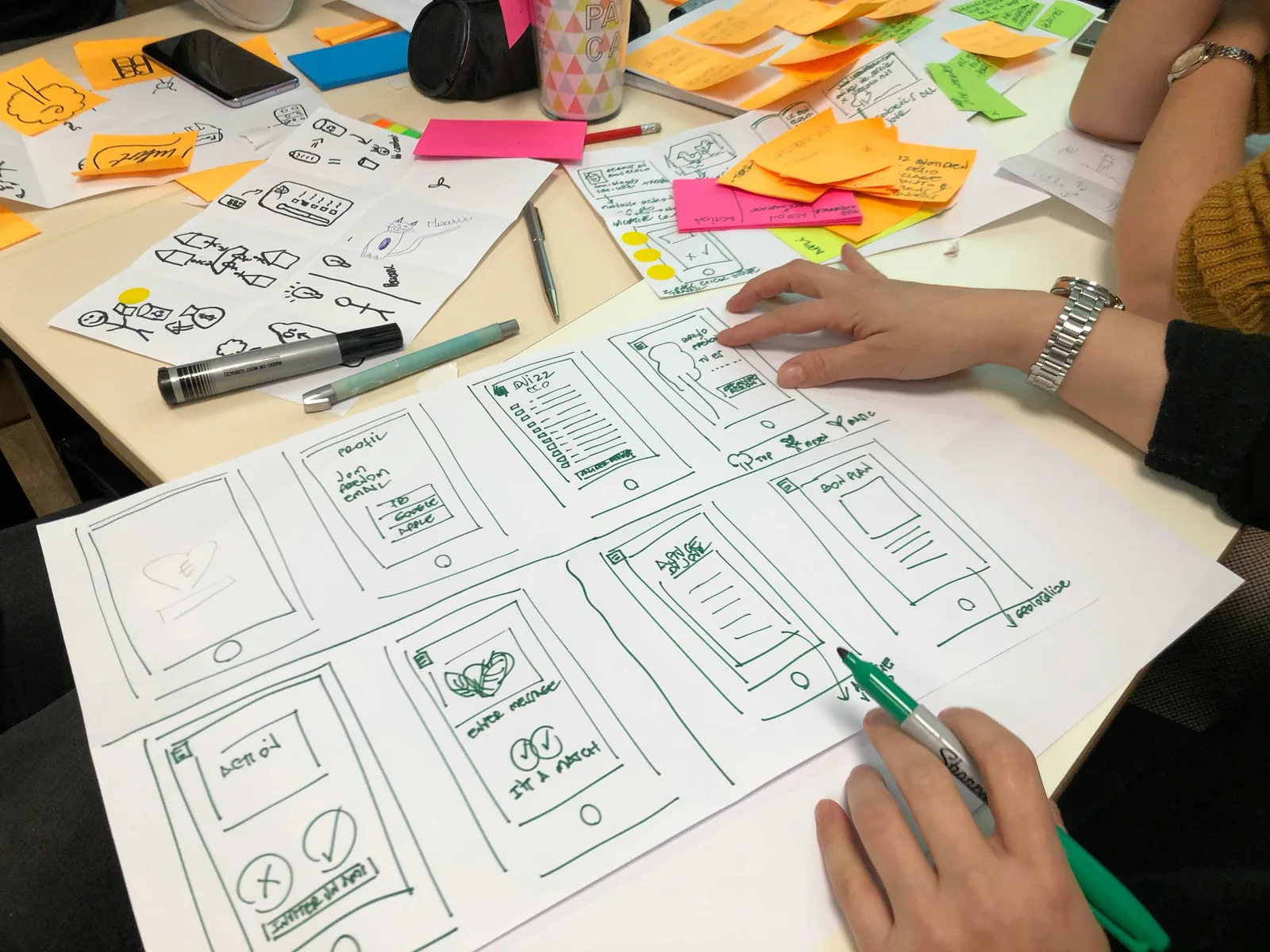
Why Research-Driven Engineering Produces Better Software
Modern software success is no longer determined by speed alone. Research-driven engineering helps businesses build scalable, maintainable, and user-focused digital products that create long-term value.
Read
Let's connect
Pick your preferred way to get started. We'll respond within 24 hours.